The SSD Revolution – 10TB SSD with 3D NAND Technology


In a joint announcement Intel & Micron have said they have begun production of 3D NAND Technology, and are expecting the technology to hit the shelves within a year.
In conventional SSD manufacturing, each NAND Chip is expensive and manufacturers are constantly trying to find ways to squeeze more of them into the space they have available, meaning a constant research & development cycle gradually making NAND Chips smaller in order to pack them in tighter purely to gain more storage space & improve reliability, improvements have been slow and gradual over the years and while we typically see older drives getting cheaper we’ve yet to see any major price changes.

3D NAND Die
Now with 3D NAND Technology, Manufacturers are able to stack chips on top of each other like a multi-story building, as opposed to the traditional method of placing them on a flat planar surface and making things smaller & smaller to fit more in – they can now just stack them on top of each other, with the initial product being 32 layers.
This means far greater capacity, and cheaper to manufacture.
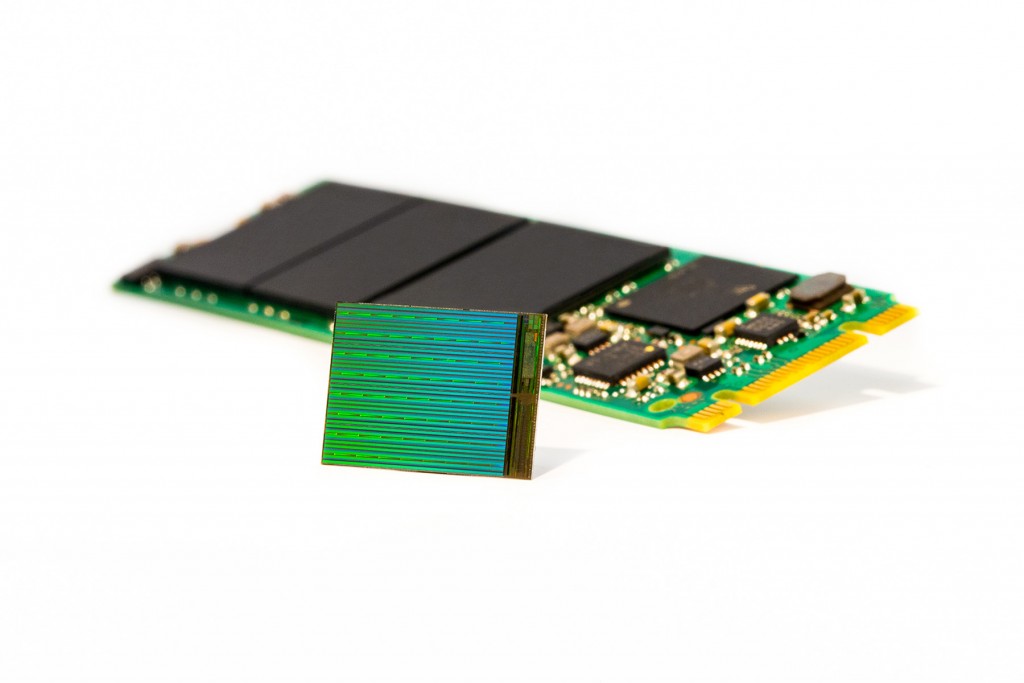
3D NAND – 3.5TB+ On something the size of a stick of gum.
Rumours are 10TB SSD Drives, and 3TB Thumb Drives – and since Intel/Micron are claiming to be able to get products
onto the shelves within a year, we won’t have very long to wait.
It’s worth mentioning Samsung has been using its own variant of 3D NAND for awhile, although not anywhere near as efficient as this new technology I think people would have to be pretty short sighted to think Samsung hasn’t been waiting for the market to catch up before they invested the resources required in developing there own large SSD products.
This technology could actually spell the end of the conventional HDD.
This video from Micron explains it more clearly, and if you want the really deep tech-specs I suggest heading over to AnandTech where they’ve made a very in-depth article on the subject.
About the Author

Blank3k: I love talking about technology, but I always try to keep things realistic & informative.
-
 EE TV – Unboxing & First Impressions
I have been well versed with Telewest Cable, experienced many revised TV Set Top Boxes & remain subscribed to the now named Virgin Media – Tivo service. I’ve also had plenty of... -
 Tidal – The New Music Streaming Service
People have no doubt heard about the “Tidal” music streaming service event in which many popular music artists signed there names to the service. If not – then...